
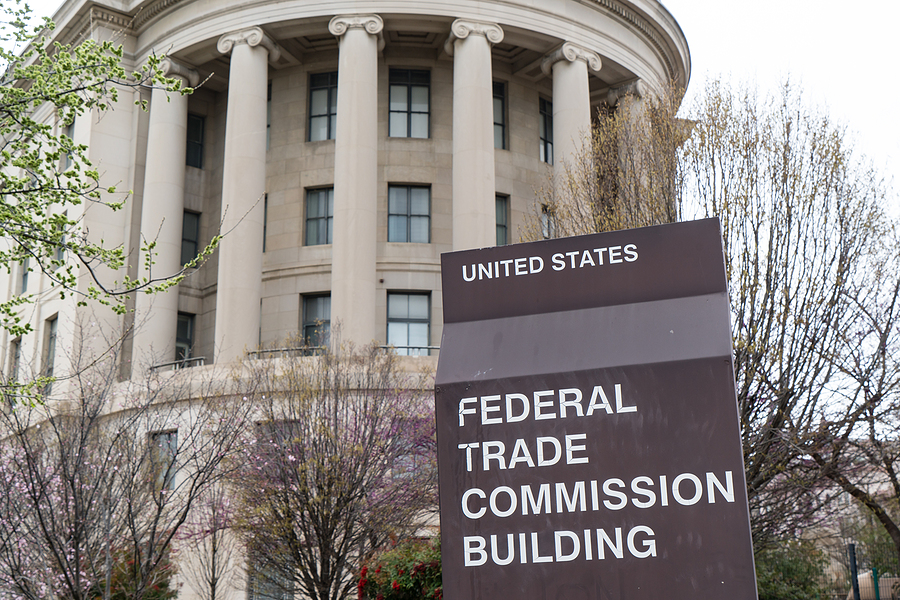
 The FTC’s “click-to-cancel” revival effort is taking shape in the open. With 32 submissions now on the record, the closed comment docket offers a clear snapshot of the dueling sides—and the breadth of organizations weighing in—on what a revived negative option rule should cover, how prescriptive it should be, and whether entire categories should be exempt.
The petition—filed by the Consumer Federation of America (CFA) and the American Economic Liberties Project (AELP)—was posted for public input under Docket No. FTC-2025-0792, with comments due Jan. 2, 2026. (Background: Subscription Insider previously covered the FTC’s request for public comment and the Jan. 2 deadline.)
This petition follows the Eighth Circuit’s decision to vacate the FTC’s 2024 “click-to-cancel” rule on procedural grounds—an outcome that turned on process, not a merits ruling on the underlying concept. (Background: Subscription Insider’s coverage of the vacatur.)
By the close of the window, the docket ranged from coordinated civil-society coalitions and municipal/consumer-law advocates to trade groups representing tech, publishing, and regulated product categories—effectively previewing the fault lines any renewed rulemaking would have to navigate.
What commenters are asking the FTC to do
At the center of the docket is the petitioners’ request that the Commission renew its trade regulation rulemaking on negative option marketing practices—commonly framed as “click-to-cancel”—following the procedural vacatur of the 2024 rule.
Supportive filings argue that subscription “traps”—easy enrollment paired with high-friction cancellation—remain widespread and that renewed rulemaking is needed to create a clearer, enforceable national baseline. Several filings emphasize that the sharpest consumer harm tends to show up not in policies on paper, but in the operational reality of how cancellation works across channels and products.
Two coalition-style filings are especially notable. One, coordinated through UC Berkeley Law’s Center for Consumer Law and Economic Justice, includes signatories such as the City of Chicago, the Center for Responsible Lending, the National Consumer Law Center, the National Association of Consumer Advocates, Consumer Action, Demand Progress Education Fund, and others, and urges the FTC to reopen rulemaking quickly.
A second civil society coalition letter is signed by organizations including Consumer Reports, the National Consumer Law Center, Public Citizen, U.S. PIRG, EPIC, and Open Markets Institute, among others.
Another substantive supporter, Truth in Advertising (TINA.org), filed an evidentiary comment arguing that deceptive negative option practices continue despite existing laws and describing recurring patterns: (1) misleading marketing to enroll consumers, (2) concealment or confusion around subscription terms, and (3) burdensome cancellation mechanisms that make exit harder than entry.
The organized pushback: how prescriptive should the FTC be?
Opposition filings generally do not defend high-friction cancellation as a business practice. Instead, they focus on process, scope, and operational consequences—including whether a renewed rulemaking could avoid the procedural defects that sank the 2024 rule, and how much flexibility businesses should retain in implementing cancellation requirements.
The Computer & Communications Industry Association (CCIA) urged the Commission to reject the petition, arguing the prior rulemaking suffered from procedural errors and that any renewed effort should rest on established statutory authority and a clearer, prevalence-based record. CCIA also argued that subscription plans deliver consumer value (convenience, price stability, efficiency) and warned that a poorly calibrated rule could push costs into pricing.
The News/Media Alliance (N/MA)—which represents newspaper, magazine, and digital publishers—said it supports clear information and simple cancellation, but urged caution about restarting the rulemaking in a way that could disrupt publisher subscription economics and established practices. N/MA flagged concern about requiring a separate consent to the automatic renewal component of a subscription offer, arguing that separating inextricably linked payment terms could frustrate consumers and add friction without commensurate benefit.
Several filings also previewed an “exemption” fault line: commenters representing regulated categories argued that state regulatory regimes already impose disclosure, consent, and cancellation obligations, and that any renewed FTC rule should carve out certain products or contract types—such as certain state-regulated credit protection products and service contracts—to avoid duplicative compliance burdens.
Why it matters for subscription operators
For subscription teams, the significance of the closed comment record is not that a rule is back in force—it is not. The significance is that the docket now provides a consolidated view of what issues would dominate any renewed effort: cancellation parity, the design and sequencing of retention “save” flows, what qualifies as affirmative consent, and where exemption lines might be drawn.
These aren’t abstract policy debates. When cancellation friction becomes a regulator narrative, the cost shows up in charge disputes, refunds, escalations, and retention playbooks that start looking like dark patterns—particularly when signup is frictionless and cancellation is not.
Next to watch: whether the FTC grants the petition and, if it proceeds, how it rebuilds the record and process to avoid the procedural pitfalls that led the Eighth Circuit to vacate the 2024 rule.
INSIDER TAKE:
We reviewed the filings—here are the fault lines that matter
The record doesn’t just show support or opposition—it previews where requirements could get more prescriptive (or more fragmented), and where compliance burden will concentrate if the FTC proceeds.
-
Treat click-to-cancel as an operations test, not a policy memo. The most durable risk pattern across the record is “easy to start, hard to stop.” If your cancellation path is materially harder than signup, assume it is discoverable and difficult to defend.
-
Expect the real debate to be about mechanics—especially retention “save” flows. If save offers introduce repeated prompts, extra steps, or confusing choices, plan as though those UX decisions will be evaluated as part of compliance posture (not marketing creativity).
-
Separate-consent requirements are a flashpoint. Publishers are warning that mandatory consent separation could add friction and reduce access; advocates argue stronger affirmative consent is necessary. Either way, operators should be able to evidence what a user agreed to, and when.
-
Track channel parity explicitly. Measure the percentage of cancellations that can be completed in the same channel as signup (web/app/phone), and where users drop off.
-
Patchwork pressure doesn’t wait for federal rulemaking. Even if the FTC moves slowly, state ARLs and related requirements keep tightening; the lowest-risk path is a single cancellation standard that meets the strictest regimes you face.
-
Exemption arguments are already in the record. If you operate in regulated or quasi-regulated categories (credit protection products, service contracts, insurance-adjacent offerings), monitor how carve-out requests are framed—those lines can influence enforcement expectations and vendor obligations.
-
Instrument the flow now. Track cancel completion rate, time-to-cancel, step count, error rate, and save acceptance rate. If cancellation becomes an enforcement focus, those metrics—and the product decisions behind them—are what you will want at hand.